Hypothyroidism Symptoms That Are Easy to Dismiss
Many hypothyroidism symptoms get mistaken for aging, depression, or hormonal shifts.

The thyroid is a small, butterfly-shaped gland sitting low in the neck, and it produces two hormones, T3 and T4, that regulate metabolism, heart rate, body temperature, mood, digestion, and reproduction. When output drops too low, every one of those systems slows down, but not all at once, and not in a way that announces itself. Hypothyroidism is the most common thyroid disorder in the country, part of a broader thyroid disease burden, estimates range from 20 million to over 30 million Americans depending on the source and case definition. Up to 60% of people with a thyroid problem do not know they have one. That gap between what's happening inside the body and what gets recognized is the entire subject of this piece.
Who is least likely to be diagnosed promptly with hypothyroidism
Women get hit roughly 10 times more often than men, and that imbalance carries a second, quieter cost: women's symptoms get filed under hormonal fluctuation, menopause, or a mental health complaint before anyone checks the thyroid. A woman in her 40s complaining of fatigue and mood changes may have her symptoms attributed to hormonal fluctuation or a mental health complaint before anyone checks the thyroid, even though thyroid testing could be warranted.
Age compounds the problem. Prevalence climbs sharply after 60, and subclinical hypothyroidism, the kind detected on labs before symptoms are obvious, occurs in roughly 15% of older women and 10% of older men. The population most likely to have hypothyroidism is the population most likely to have its symptoms written off as "just getting older.""
And the numbers keep climbing regardless. U.S. Prevalence rose from 9.5% in 2019 to a notably higher share by 2019. Some of that rise reflects better detection, but not all of it does. The diagnostic gap isn't closing as fast as the disease is spreading.
Fatigue that sleep does not fix
Fatigue is usually the first thing people notice, and it's also the easiest to dismiss, because everyone's tired. But what if the tiredness is not the ordinary kind? Thyroid hormone plays a central role in regulating cellular metabolism. When T3 and T4 run low, the body's ability to sustain normal energy production is impaired.
That's a mechanical shortfall. That's a metabolic shortfall that rest alone cannot resolve. Hypothyroid fatigue persists no matter how much rest a person gets. One population-based case-control study found that 81% of hypothyroid patients reported tiredness, making it the single most prevalent symptom out of everything researchers tracked. When four out of five patients share a symptom, that symptom deserves more attention than "everyone's tired" usually gets it.
Weight gain, cold intolerance, and constipation as a metabolic package
These three come from the same root cause. A falling basal metabolic rate drives all three, and once T3 and T4 drop, the body burns less fuel, holds onto more fluid, and moves slower in nearly every function it runs.
Weight gain from hypothyroidism typically ranges between 5 and 10 pounds according to the American Thyroid Association. Most of that is fluid retention and a slower metabolic rate, not new fat tissue. Treatment typically results in only modest weight loss. If someone expects to lose 30 pounds once their thyroid gets treated, they'll be disappointed, because the extra weight was mostly water to begin with.
Cold intolerance follows the same logic. A slower metabolism generates less body heat, so patients feel cold in rooms where everyone else is fine, and the cold is felt first in the hands and feet. Constipation tracks right alongside it: thyroid hormone drives gut motility, and when it drops, digestion slows down with everything else. This one gets normalized more than almost any other symptom on this list, because people rarely bring up bowel habits until something feels seriously wrong.
Brain fog and mood shifts that look like depression or anxiety
Forgetfulness and mental fogginess appear often enough in hypothyroidism that the Merck Manual lists them as a general presenting symptom. The overlap with depression is where things get complicated: slowed thinking, fatigue, low motivation, and reduced attentiveness describe both conditions almost interchangeably.
Why exactly does this happen? Thyroid hormone influences neurotransmitter activity directly, so a deficit doesn't just make someone tired, it can flatten mood in a way that's genuinely hard to shake through willpower or rest alone. That's a biochemical effect, not a character flaw or a motivation problem, though it often gets treated like one.
In rare and severe cases, left undiagnosed long enough, psychiatric symptoms can escalate into personality changes, dementia-like presentations, or even frank psychosis, a phenomenon Merck's manual terms "myxedema madness." That extreme is uncommon. But it marks the far end of a spectrum that starts with something as ordinary-sounding as forgetting where the car keys are.
Dry skin, hair changes, and nail brittleness as a thyroid–skin signal
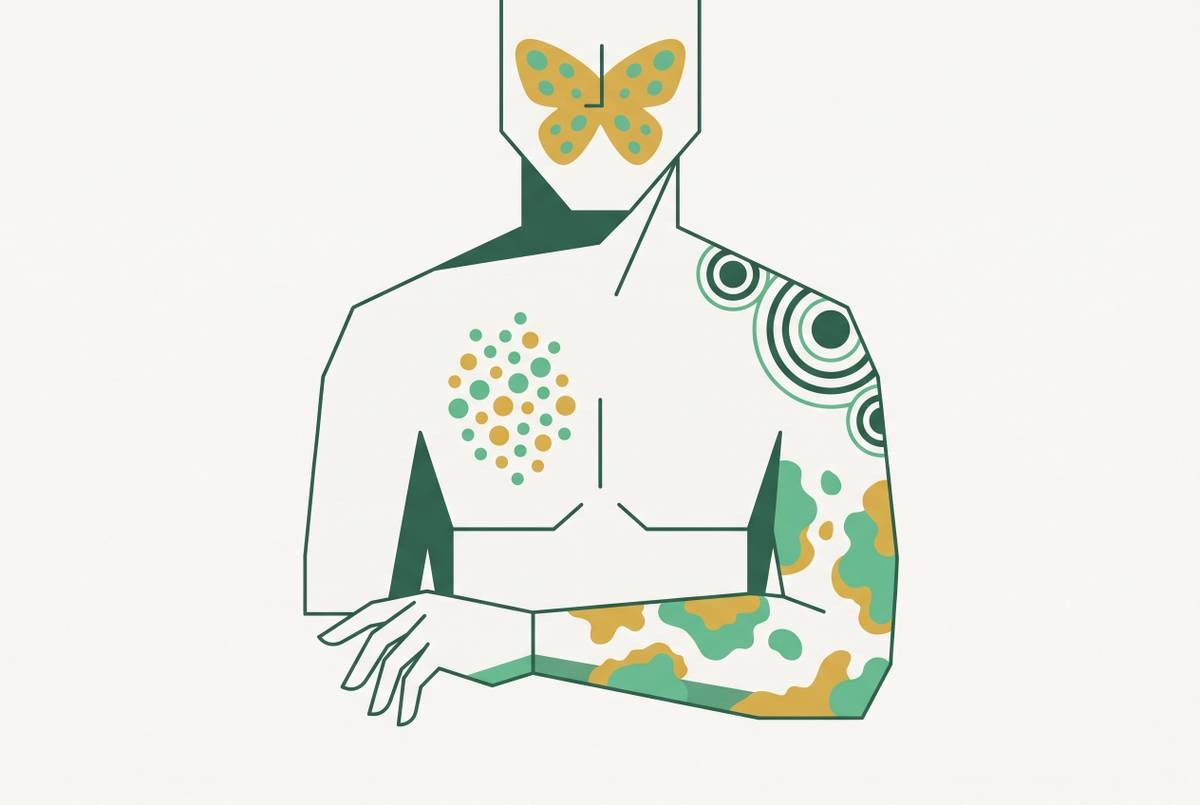
Over 80% of patients with primary hypothyroidism show some form of thin, rough, cold, or dry skin, reflecting thyroid hormone's direct role in skin function. That's not a coincidental side effect. Thyroid hormone receptors exist in keratinocytes, fibroblasts, hair follicles, and sebaceous glands, meaning skin is a target organ for thyroid hormone. It's a target organ, every bit as much as the heart or the gut.
The mechanism gets specific fast. Hypothyroidism slows enzymes in the cholesterol sulfate cycle, disrupts the skin barrier, and impairs development of structures called lamellar granules (also known as Odland bodies) that normally help skin hold moisture. Mucopolysaccharides build up in the dermis, and sweat gland output drops. The net effect: skin that can't retain water, can't shed dead cells at a normal pace, and can't regulate itself against temperature changes. This is a structural failure in the skin's own machinery.
Menstrual changes and fertility disruption that get blamed on other causes
Menstrual irregularity, heavier or more frequent periods, appears often enough in hypothyroidism that it's considered part of the core symptom cluster. More than 2 in 10 women with hypothyroidism report some type of irregular period, and thyroid dysfunction can meaningfully disrupt the cycle.
The trouble is context. These changes hit women in the age ranges where stress, perimenopause, and PCOS are the default explanations, so thyroid testing often gets skipped. One might argue that's a reasonable first guess given how common those other conditions are. But it means thyroid function frequently isn't checked until every other explanation has already been ruled out.
The fertility mechanism itself is fairly direct. Hypothyroidism can interfere with ovulation and normal hormonal cycling in ways that make conception harder. Each of those on its own can make conception harder. Together, they explain why an underactive thyroid can surface during fertility workups that started out looking for a different cause.
The elevated cholesterol finding that almost no one links to their thyroid
Elevated LDL cholesterol belongs on the hypothyroidism symptom list, but almost nobody connects the two, for a simple reason: high cholesterol doesn't feel like anything. There's no fatigue, no ache, no visible sign, just a number on a lab report that creeps upward.
Thyroid hormone regulates how the liver clears LDL from the bloodstream, so when T3 and T4 fall, that clearance slows down and cholesterol accumulates. Subclinical hypothyroidism, specifically when TSH climbs above 10 mIU/L while free T4 stays within normal range, is linked to both high cholesterol and atherosclerosis. That raises an important question for anyone whose lipid panel keeps trending the wrong direction despite no real change in diet or exercise: has anyone actually checked the thyroid? Lipid panels and thyroid panels are rarely ordered side by side, even though the connection between them is well established.
Why the pattern matters more than any single symptom
Researchers looking at 34 symptoms commonly attributed to hypothyroidism found that only 13 were statistically overrepresented in patients who actually had the condition. And none of those 13, on its own, could reliably pick out a hypothyroid patient from someone without the disease.
That's the real diagnostic problem. Doctors are missing a diagnosis built from individually low-specificity symptoms rather than some dramatic, obvious sign. It's that each individual symptom, fatigue, weight change, cold hands, dry skin, has low specificity on its own. Fatigue alone means almost nothing. Dry skin alone means almost nothing. Fatigue, weight gain, cold intolerance, dry skin, mood changes, irregular periods, and rising cholesterol showing up together, in the same person, over the same stretch of months, points to a single condition rather than unrelated complaints. Fatigue, weight gain, cold intolerance, dry skin, mood changes, irregular periods, and rising cholesterol showing up together, in the same person, over the same stretch of months, signal a single underlying condition rather than unrelated complaints.
So what can someone actually do with that? Track duration: has this been weeks or months? Track consistency: is it steady, or does it come and go? Note what's changed and what hasn't, and pay attention to which symptoms cluster together rather than treating each one as its own isolated complaint. Walking into a clinical appointment with that kind of detail, instead of a single vague symptom, changes the quality of the conversation that follows. The thyroid rarely announces itself with one loud signal. It tends to leave a trail, and the trail is where the diagnosis lives.
Sources
- Hypothyroidism - Endocrinology - Merck Manual Professional Edition
- The overlooked symptoms of hypothyroidism
- Thyroid Problems: 10 Warning Signs Your Thyroid May Be Off
- 6 Subtle Signs of Hypothyroidism in Women: Samuel I. Fink, MD: Internal Medicine
- Vol 16 Issue 8 p.5-6 | American Thyroid Association
- gitnux.org