Fever Blister Early Warning Signs Before Outbreak
Catching the tingle early stops the blister before it forms.
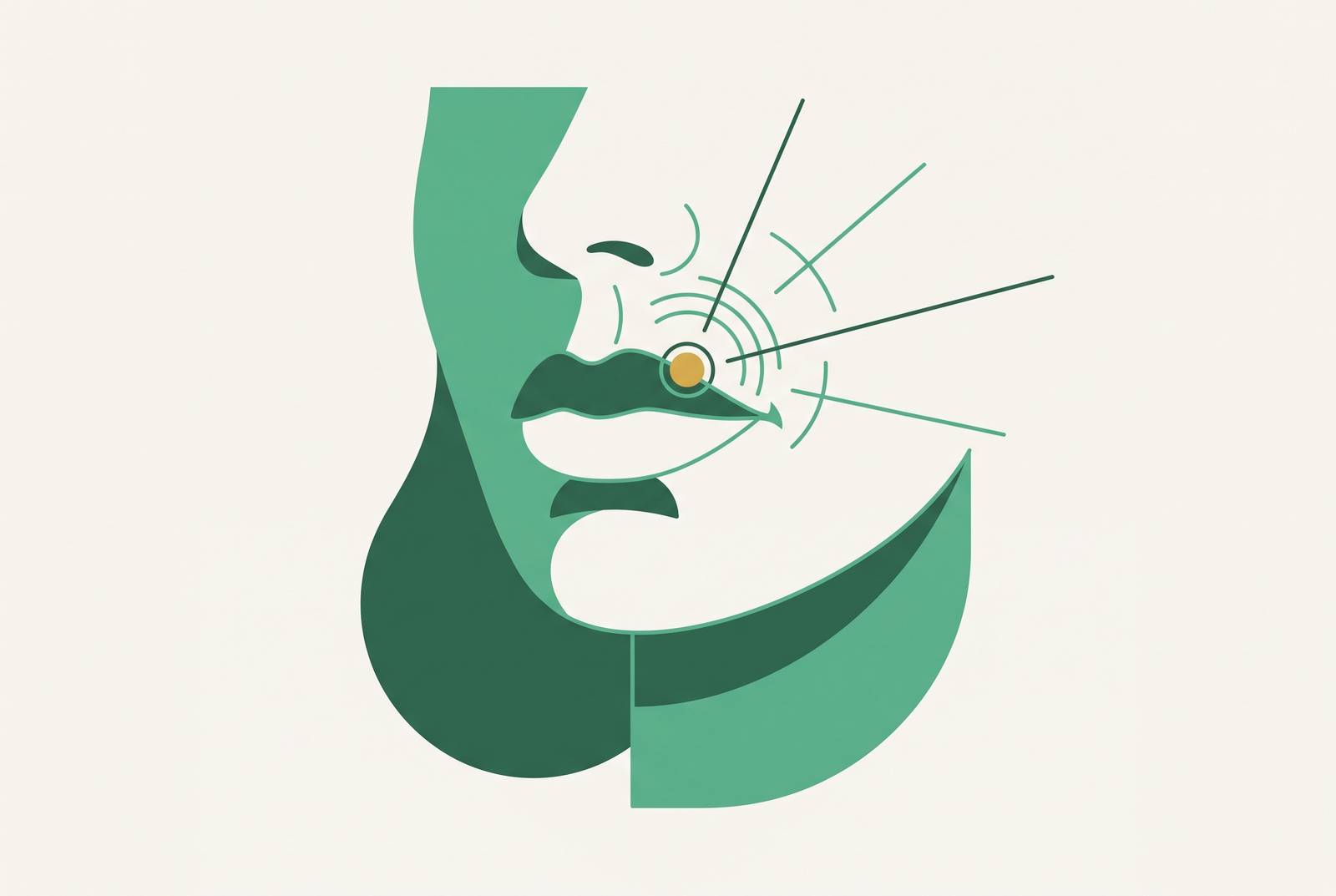
A fever blister doesn't start when you see it. It starts hours, sometimes days, before, while the virus is still moving through nerve tissue and the skin above it just feels off. Most people miss this window entirely, not because it's subtle, but because nobody ever told them what to listen for.
HSV-1, the virus behind fever blisters and cold sores, is almost absurdly common. A global health body estimates 3.8 billion people under 50, roughly 64% of the global population, carry it. In one country, CDC NHANES data puts oral HSV-1 prevalence at about 48% of adults. Yet only around one in five Americans actually gets a cold sore in a given year, and among those who do, two to three outbreaks annually is typical. For everyone else, the virus just sits there, silent. That silence is exactly why most carriers never learn to recognize the signs that precede an outbreak: there's nothing to notice most of the time, so when a symptom finally appears on the skin, it doesn't register as meaningful. It just feels like a weird tingle that goes away on its own, or so people assume, right up until it doesn't.
What the virus is doing in the hours and days before a blister forms
To understand why the warning signs feel the way they do, it helps to know where the virus actually lives. After a first infection, HSV-1 doesn't stay put in the skin. It travels backward along nerve fibers, a process called retrograde axonal transport, up into the trigeminal ganglion: a cluster of nerve cell bodies located near the ear. That's where it sets up permanent residence. Not temporary. Permanent, for life, once acquired.
Under normal circumstances, the immune system keeps this dormant virus in check. CD8+ T cells patrol the trigeminal ganglion specifically to suppress reactivation. When that surveillance gets disrupted, for reasons ranging from stress to sun exposure (more on that later), the virus takes the opportunity to wake up and travel back down the same nerve pathway to the original site of infection on the lip or face.
This detail explains why the earliest symptoms are neurological rather than visual. Because the virus is moving through nerve tissue on its way back to the skin, the earliest symptoms aren't visual at all. They're neurological: tingling, burning, a strange pressure. The blister hasn't formed yet because the virus hasn't arrived yet. It's still in transit.
Viral shedding begins during this transit, not once a blister appears. Shedding typically happens during the first four to five days of an outbreak, and that clock starts in the prodrome. Meaning a person can be contagious before there's anything to see.
The specific sensations that signal an outbreak is coming, and the narrow window they represent
This pre-blister phase has a name: the prodrome. Its length varies a fair amount from person to person, ranging anywhere from two hours to two days. Some sources, like herpes.org.nz, put the typical warning window at 6 to 24 hours before blisters appear; others place it closer to 24 to 48 hours. Both ranges are probably right, just describing different people, or even the same person on different occasions.
What does the prodrome actually feel like? The sensations are almost always localized to the exact spot where the blister will eventually appear. The most commonly reported first signal is tingling. After that, people describe:
- Itching or burning at one specific point
- Tightness, or what's often described as just an "odd feeling" in a small area
- Increased sensitivity, pressure, or a sense of fullness
- Redness, swelling, or warmth in the day or two right before the blister surfaces
Some outbreaks, particularly first-time or primary infections, bring along systemic symptoms too: a low-grade fever, general fatigue, swollen lymph nodes. But recurrent outbreaks, the kind most carriers actually deal with, rarely involve any of that. For most people, the localized tingling is the entire warning system. No fever, no fatigue, just a small, specific patch of skin that feels wrong.
Why does it always show up in the same spot? Why does it always show up in the same spot? Because the virus is traveling back down the same nerve pathway to the same patch of skin it originally infected. The prodrome isn't a vague, full-face sensation. It's precise. And once someone learns to recognize that precision in their own body, the prodrome stops feeling random and starts feeling like information.
Not everyone experiences it the same way, though. Some people get a loud, consistent signal every single time. Others notice something faint and easy to dismiss. And a smaller group doesn't seem to get a detectable prodrome at all. Does the tingling always show up in the same spot? Around the same time of day? After a particular kind of week? The answers set up the next section.
Why acting during the prodrome, not after a blister forms, is when intervention matters
Antiviral treatment works best when it starts during that early tingling stage, ideally within 24 hours of the first sensation. Once a papule, vesicle, or open ulcer is actually visible, the window for episodic antiviral treatment has largely closed. Medication can still help at that point, maybe shaving a bit off the healing time, but catching it early heals it meaningfully faster than catching it late.
Topical options work under the same logic. Applying something at the very first tingle can, in some cases, stop the outbreak from ever progressing to a full blister. Apply it after the blister's already there, and it's playing catch-up instead of prevention.
There's also the contagiousness angle, which tends to get overlooked. Someone in the prodrome stage is potentially already shedding virus, before anything is visible to them or anyone else. Acting early isn't only about personal comfort or shortening the outbreak. It's about reducing the odds of passing the virus to someone else during a window when there's no visible reason to be cautious.
None of this means every outbreak gets caught in time. Prodromal signals can be subtle, easy to write off as nothing, or simply absent that particular time. But building the habit of noticing, consistently, is what shifts the odds. Most outbreaks, not all, become catchable once someone knows what they're feeling for.
What tends to push the virus out of dormancy and into the prodrome
Reactivation doesn't happen at random. It follows a fairly well-documented set of triggers: psychological stress, physical fatigue, sun or UV exposure, fever, illness, hormonal shifts (including changes across the menstrual cycle), poor diet, and physical procedures like dental work, surgery, laser resurfacing, or dermabrasion.
The sun exposure connection has a clear mechanism behind it, which makes it worth explaining rather than just listing. UVA and UVB rays temporarily suppress the immune cells patrolling the skin's surface. With that surveillance dimmed, dormant virus in the nerve tissue gets a window to reactivate without being intercepted early. Sunny vacations and cold sores occur together so often because UV rays temporarily suppress the immune cells patrolling the skin's surface, giving dormant virus in the nerve tissue a window to reactivate.
Procedural risk deserves particular attention for anyone planning facial work. UpToDate has reported HSV reactivation risk as high as 50 to 70 percent following trigeminal nerve decompression, facial dermabrasion, or ablative laser resurfacing, high enough that anyone with a history of cold sores considering one of these procedures should be having a conversation about prophylactic antivirals well before the appointment, not after. That's not a small number. Anyone with a history of cold sores considering one of these procedures should be having a conversation about prophylactic antivirals well before the appointment, not after symptoms start.
Hormonal patterns are real too. Premenstrual shifts are a documented trigger, so anyone who notices outbreaks clustering around their cycle isn't imagining a pattern. That's a legitimate biological signal.
Which raises a practical question: if triggers are somewhat predictable, can the warning window be extended even further back? A simple trigger log, nothing clinical, just a note after each outbreak about what preceded it, tends to reveal patterns within a few cycles. Knowing that stress or sun exposure reliably comes before an outbreak means increased vigilance can start before the tingling even begins.
Treatment options to have ready before the prodrome starts
Once the pattern is recognizable, the next question is practical: what should actually be on hand when the tingling starts?
Prescription antivirals have the strongest evidence behind them. Acyclovir, valacyclovir, and famciclovir all work by interfering with viral DNA synthesis, and all are generally well tolerated. For episodic treatment, valacyclovir (brand name Valtrex) at 2 grams every 12 hours for one day is FDA-approved, and it needs to start at the very first prodromal symptom to work as intended, whether that's tingling, itching, or burning.
For people who get outbreaks frequently, somewhere between 5 and 10 out of every 100 people who get cold sores experience them more than five times a year, daily suppressive therapy is an option. Daily valacyclovir at 500 mg has been shown to reduce recurrence by 70 to 80 percent. Suppressive use specifically for cold sores is considered off-label, so this requires a conversation with a clinician rather than a decision made solo.
Over-the-counter options are more limited than people often assume. Docosanol, sold as Abreva, is the only FDA-approved OTC topical for cold sore treatment. It works by blocking the virus from entering healthy skin cells, and it's most effective when applied at the very first sign of tingling or itching, up to five times daily. Used early, it can shave off about a day of healing time. Not dramatic, but real.
Lysine is widely sold, both as a topical and an oral supplement, but the evidence is thinner. There isn't enough data to say whether topical lysine actually works, and oral lysine at 1,000 mg daily has only limited evidence supporting prevention. Other OTC products, like zinc oxide and glycine cream, have shown some improvement in recovery time, and camphor-and-phenol products like Campho-Phenique can help ease symptoms and dry out an existing blister.
If sun exposure is a known personal trigger, SPF lip protection is a clinically recommended preventive step, according to UpToDate, and it's about as low-effort as prevention gets.
When to actually involve a clinician:
- A first-ever outbreak, to confirm the diagnosis and build a plan
- Outbreaks that are frequent, severe, or genuinely disruptive, worth a suppressive therapy conversation
- A planned facial procedure, given that documented 50-70% reactivation risk
- Immunocompromised status, which changes the risk calculus entirely and needs direct clinical guidance
Telehealth is a practical, lower-barrier entry point. An asynchronous, message-based consultation with a licensed clinician can be enough to get a prescription or a management plan in place, without requiring an in-person visit. That matters most for people who want antivirals already sitting in a drawer before the next prodrome hits, rather than scrambling to find an appointment while a blister forms.
How to use the outbreak lifecycle to understand contagiousness and protect others
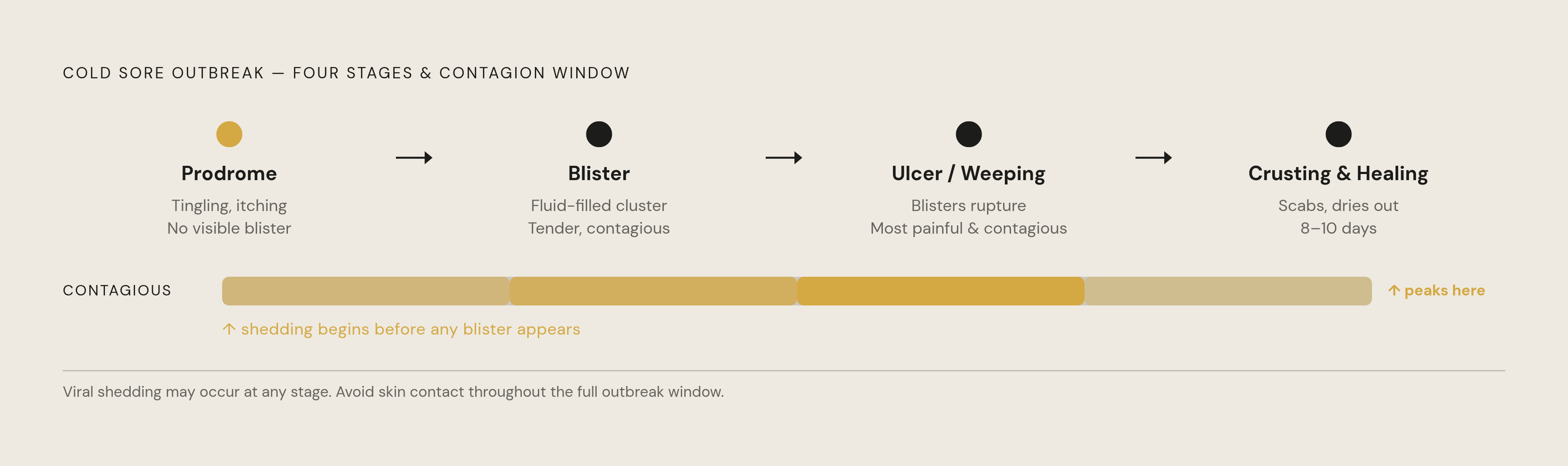
The outbreak itself moves through four fairly distinct stages, and contagiousness runs through all of them, not just the visible parts.
Prodrome comes first: sensory symptoms, no visible blister, but shedding may have already started. Then the blister stage, a small fluid-filled cluster forms, often tender or painful, and highly contagious. After that, the ulcer or weeping stage, where blisters rupture. This tends to be both the most painful stage and the most contagious, since the fluid released contains active virus. Finally, crusting and healing: the sore dries, scabs over, and the skin typically heals within 8 to 10 days without scarring.
Contagiousness isn't confined to the moment a blister is visible. It runs from the prodrome all the way through full healing. Asymptomatic shedding, the virus present without any visible sore at all, is also possible, so transmission risk technically never drops to zero. But it's highest when active signs, visible or sensory, are present.
Practically, that means avoiding kissing, sharing lip balm, utensils, or drinking glasses for the full duration of an outbreak, not just while a blister is visibly open. It also means being careful about touching the affected area and then touching the eyes; herpes keratitis, an eye infection caused by the same virus, is a more serious complication than most people realize.
None of this is meant to sound alarming. Most outbreaks, in people with healthy immune systems, resolve on their own within 8 to 10 days regardless of what's done about them. Early recognition doesn't cure anything. It shortens the course and cuts down transmission risk. That's the actual goal, not eliminating a dangerous illness, just managing a common one more skillfully.
Building your own prodrome awareness: a practical framework
Recognizing a prodrome isn't some innate sensitivity certain people have and others don't. It's closer to a skill, one that sharpens with attention over repeated outbreaks. Anyone paying close attention for a few cycles tends to get noticeably better at catching it.
A useful way to build that skill breaks into three parts.
First, know your trigger profile. Which of the documented triggers, stress, sun exposure, illness, hormonal shifts, fatigue, diet, tend to show up before an outbreak? A simple log kept after each occurrence, nothing elaborate, often reveals a pattern within just a few cycles.
Second, know your own prodromal signature. Where exactly does the sensation show up? What does it actually feel like, tingling, burning, tightness, pressure? How much lead time does it typically give before the blister appears? These details are individual, but they also tend to be remarkably consistent for a given person over time.
Third, and maybe most overlooked: have a response ready before it's needed. The prodrome window, often just 6 to 24 hours, is not the time to start researching treatment options from scratch. That means having a conversation with a clinician in advance, keeping a prescription filled and accessible, and already knowing which OTC option gets reached for first.
This is where advance telehealth conversations earn their keep. Getting a prescription in place before the next outbreak, through a message-based consultation with a licensed clinician, is a genuinely practical use of that kind of care. It builds the management plan on a calm day, so nobody's scrambling to figure out logistics while a lip already feels like it's on fire.
The prodrome is, in a real sense, the body's own early-warning system. It's been signaling this the whole time. The only real question is whether anyone's paying attention when it does.