Pelvic Cramping Outside of a Period
Understanding the underlying cause of cramping offers relief where waiting alone won't.
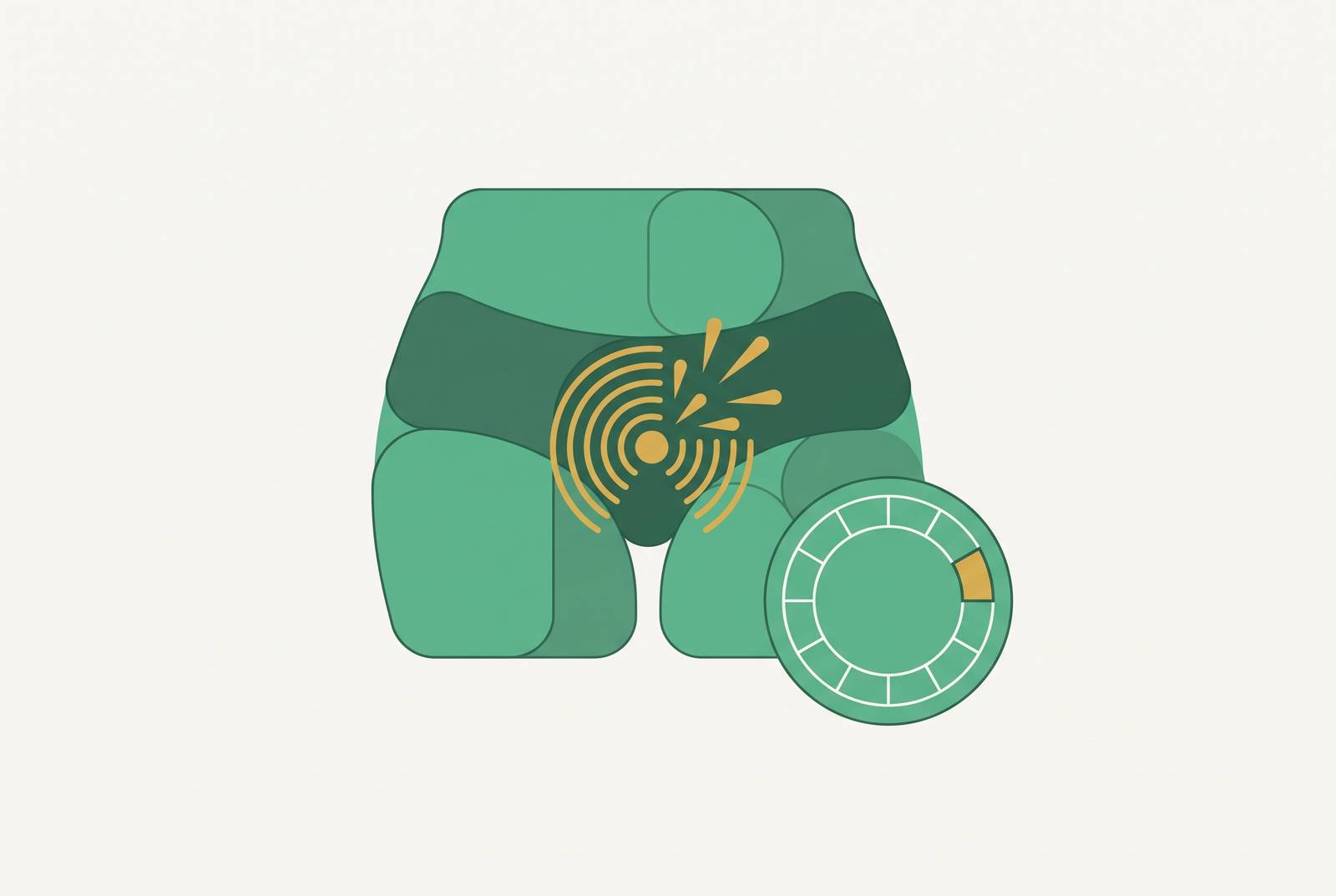
Pelvic cramping without a period is not a mystery to shrug off. The timing, the location, and whatever tags along with it, fever, nausea, bleeding, a change in bathroom habits, are the body pointing at a specific cause. The job here is to learn how to read that pointing instead of just waiting for the ache to pass. Research puts chronic pelvic pain at somewhere between 15% and 26% of people with female anatomy, a large share of the population walking around with an unexplained symptom. That is not a rare complaint. That is a large share of the population walking around with a symptom most of them have never had explained to them properly.
Cramping is a symptom. The uterus does not have twenty different ways of hurting. It has basically one, and it uses that same sensation to signal a dozen different underlying problems. So the real question shifts from "why do I have cramps" to "what is my body actually reacting to right now."" That question deserves attention, because the most common instinct, waiting it out, is the wrong move for at least half the causes below.
How the body produces cramping even without a period
Menstrual cramps happen because prostaglandins, hormone-like compounds, tell the uterus to contract. That part is well understood. What gets missed is that this mechanism does not clock out for the other 24 days of the month.
Conditions like endometriosis and PCOS create ongoing hormonal imbalances. Abnormal estrogen and progesterone levels can drive up prostaglandin production even when there is no period anywhere in sight, so the uterus contracts on a schedule that has nothing to do with menstruation.
Then there is the pelvic floor, the group of muscles holding up the bladder, uterus, vagina, and rectum. When those muscles get tense or stop firing correctly, they can cramp on their own, and that cramping can feel identical to a period starting. Nothing about the sensation itself tells you where it is coming from.
Chronic pelvic pain also involves something called central sensitization, where the nervous system gets overly sensitive to pain signals, a pattern recognized across chronic pain conditions more broadly. That is part of why pain sometimes lingers or intensifies long after whatever triggered it has resolved. One sensation, many possible sources. Keep that in mind, because it threads through every section below.
Cramping that follows the cycle's midpoint: ovulation pain
Roughly 10 to 14 days before a period, an ovary releases an egg. For a meaningful number of people, that release comes with a distinct ache, clinically called mittelschmerz, German for "middle pain." It is a recognized clinical event.
What does it feel like? Usually one-sided, low in the abdomen, sharp or dull depending on the person, lasting anywhere from a few minutes to a few hours. The side that releases an egg can vary from cycle to cycle, so the location of the ache may shift. Some people notice vaginal discharge around the same time, or mild bloating, or breast tenderness.
Three clues separate this from something more concerning: it lands at a predictable point in the cycle, it does not last long, and it stays on one side. Tracking those three things for a couple of cycles makes the pattern obvious fast. Ovulation pain is generally harmless and needs no treatment beyond a heating pad or an over-the-counter pain reliever.
Cramping as an early sign of pregnancy or its complications
Around four weeks into a pregnancy, a fertilized egg attaches to the uterine lining. That process, implantation, can cause mild cramping, sometimes with light spotting. It is brief, it is subtle, and it gets mistaken for the start of a period constantly, mostly because it feels almost exactly like one.
As pregnancy continues, the uterus expands and adjusts, which causes its own low-grade cramping. Breast tenderness, nausea, fatigue, and food aversions usually appear around the same window, so the cramping rarely arrives alone.
Cramping that starts out feeling like a period and then intensifies, especially alongside vaginal bleeding, calls for a phone call to a clinician. That pattern can point toward miscarriage.
The pattern that deserves the most urgency, though, is ectopic pregnancy: a fertilized egg implanting outside the uterus, implanting outside the uterus. The pain tends to be sharp, one-sided, and it can radiate up to the shoulder or down into the lower back. Dizziness, fainting, rectal pressure, and vaginal spotting can occur alongside it. This is an emergency. Treatment usually means either a methotrexate injection or surgery, and in some states, legal restrictions around methotrexate can complicate or slow access to that treatment. Know that logistical detail ahead of time, not something to discover mid-crisis.
If pregnancy is even possible and cramping shows up without a period, the first move is a pregnancy test. After that, a clinician can confirm what is going on and map out next steps.
Endometriosis: the condition most likely to be behind persistent, unexplained cramping
Endometriosis happens when tissue similar to the uterine lining grows outside the uterus: on the ovaries, the fallopian tubes, pelvic tissue, sometimes even the bowel. That tissue still responds to hormonal cycles. It just has nowhere to go when it would normally shed, and that is where a lot of the pain comes from.
It is estimated to affect about 11% of American women during their reproductive years, ages 15 to 44, more than most people would guess if asked cold. That is not a niche condition. That is more women than most people would guess if you asked them cold.
What sets its cramping apart? It feels like a period cramp but ignores the calendar entirely, hitting at any point in the month. Pain during deep penetration, painful bowel movements, and lower back pain often ride along with it.
People should be angry about this. A peer-reviewed meta-analysis found that diagnostic delay for endometriosis averages 6.8 years across studies globally, with total time to diagnosis ranging from 5 to 8 years in the United States. The physician-driven portion of that delay, the time between a patient raising concerns and a doctor actually pursuing a diagnosis, runs between 2.1 and 3.4 years on its own. A systematic review in Frontiers in Medicine found the most recent studies averaging 4.4 years, suggesting the gap is narrowing. Narrowing is not the same as closed. 4.4 years is still 4.4 years of pain nobody explained.
Why does this keep happening? Partly because there is no reliable non-invasive test for endometriosis. The gold standard is laparoscopic surgery. That means anesthesia, a surgeon, and recovery time, not exactly a same-day appointment. But the more damning detail is this: a recent systematic review found the delay is driven primarily by physicians, not by patients failing to speak up. That distinction changes what a person should do about it. If cramping does not follow a clean cyclical pattern, or it has been getting worse over time, that is not something to explain away. It is a reason to push for evaluation, and to keep pushing if the first answer is a shrug. Treatment, once diagnosed, gets tailored to the person: hormonal medication, at-home management, or surgery to remove the tissue.
Uterine fibroids and adenomyosis: structural causes that often go unnoticed
Uterine fibroids are common. Startlingly common, actually: an estimated 70% to 80% of women develop them at some point in their lives. That number alone should not cause alarm, since most fibroids are benign and produce zero symptoms. Plenty of people carry them without ever knowing.
Problems occur when fibroids grow large or multiply. At that point, people tend to describe pressure or a dull ache in the lower abdomen or back, pain during intercourse, or a general sense of pelvic heaviness. Fibroid pain tends to feel like persistent pressure rather than the sharp, wave-like cramping associated with a period, and that distinction alone can help someone figure out which camp they are in.
Adenomyosis is a separate condition, though it gets confused with endometriosis constantly. Here, the uterine lining grows into the muscular wall of the uterus itself, rather than outside the organ. A recent clinical review points to a lack of solid treatment guidelines and limited high-quality evidence complicating both diagnosis and treatment. There is no clean prevalence number to lead with here, and that absence says something on its own: this is a condition medicine still has not fully mapped out.
Both fibroids and adenomyosis tend to get managed with a watch-and-wait approach until symptoms become disabling. Waiting for pain to become unbearable before bringing it up is the wrong instinct. Clear, consistent symptom reporting, early and often, is the better tool.
Pelvic inflammatory disease: when cramping signals an active infection
Pelvic inflammatory disease, or PID, is a bacterial infection affecting the reproductive organs: the fallopian tubes, uterus, ovaries, cervix, or vagina. PID most commonly traces back to an untreated sexually transmitted infection, and STIs are a common underlying factor.
The cramping here tends to sit in the lower pelvis and lower back, and unlike ovulation pain, it does not stick to a particular point in the cycle.
What sets PID apart is the combination of symptoms. It is the combination: fever, chills, abnormal vaginal discharge (sometimes foul-smelling), pain during sex, and burning during urination. That cluster is the tell.
Delaying evaluation risks permanent damage, including infertility, a higher risk of ectopic pregnancy down the line, and chronic pelvic pain that can outlast the infection itself. Treatment is antibiotics, though severe cases sometimes require hospitalization. People who have an undiagnosed STI at the time of an IUD insertion may face a higher risk of developing PID.
The Digestive and Urinary Systems as the Real Source
The reproductive organs do not have the pelvis to themselves. The digestive and urinary systems sit in the same cramped real estate, and cramping from one can feel nearly indistinguishable from cramping in another. If cramping tracks with bowel movements or how full the bladder is, rather than with cycle timing, the gut or bladder is probably the actual source.
Irritable bowel syndrome, IBS, causes cramping abdominal pain that typically shows up before or during a bowel movement. The giveaway clue is a change in bowel frequency or consistency: constipation, diarrhea, or some unpredictable mix of both. IBS also tends to co-occur with chronic pelvic pain, and that is not coincidence. Both conditions seem to involve a nervous system that has become overly sensitive to pain signals.
Inflammatory bowel disease, IBD, covers Crohn's disease and ulcerative colitis, and the two present differently. Crohn's tends to cramp in the right lower or middle abdomen, ranging from mild to severe. Ulcerative colitis shows up on the lower left. Both come with their own warning signs, urgent bowel movements, blood in the stool, unexplained weight loss, fatigue, fever, and those symptoms are what separate IBD from a purely gynecologic problem.
Interstitial cystitis, sometimes called painful bladder syndrome, causes cramping in the lower pelvis and genitals that gets worse as the bladder fills. It can intensify in the days leading up to a period, which makes it easy to mix up with menstrual cramping. Frequent, urgent urination is the clue that points toward the bladder instead.
Urinary tract infections cause their own flavor of pelvic or abdominal cramping, usually paired with urinary urgency, burning during urination, back pain, or blood in the urine. Most UTIs need antibiotics, and they can escalate into a medical emergency if flu-like symptoms show up, or if the person is immunocompromised or pregnant.
How Birth Control, Especially IUDs, Affects Pelvic Cramping
Cramping is a well-documented side effect of an IUD, commonly occurring after insertion and feeling similar to period cramps. Beyond that initial window, pain and irregular bleeding are among the ongoing complaints that some people report.
Less common but more serious issues can also occur, including the device shifting out of place or other complications requiring clinical attention. That PID risk is higher in people who had an undiagnosed STI at the time of insertion, as IUDs do not address underlying infections.
In August 2024, the CDC updated its national Selected Practice Recommendations for Contraceptive Use to include guidance on managing pain during IUD insertion. Lidocaine is now recommended as a potentially useful option, while misoprostol is advised against for routine use. That means it is reasonable, and backed by current guidance, to ask a clinician about pain management before getting an IUD placed. That option is worth raising with a clinician before the appointment.
IUDs are not only a source of cramping, though. Hormonal IUDs can also reduce heavy periods, ease cramping, and improve pelvic pain tied to endometriosis or fibroids. People who deal with painful, heavy periods often find their periods get lighter and less painful after getting one placed.
For PCOS specifically, hormonal contraception, including oral birth control, is a front-line option for managing irregular cycles and the cramping that comes with them. Treatment usually pairs that with lifestyle adjustments and sometimes additional medication.
One honest note on the other side of the ledger: sex hormones influence brain function and neurotransmitter activity, and mood changes or depressive symptoms are among the more frequently cited reasons people stop using hormonal contraception. Know that going in, rather than getting caught off guard later.
Lifestyle and pelvic floor factors that mimic period cramps
The pelvic floor keeps coming up in this piece for a reason. It is a set of muscles supporting the bladder, uterus, vagina, and rectum, and when those muscles tighten up or lose coordination, they can generate cramping that has nothing to do with hormones, infections, or reproductive organs.
Stress plays into this more than most people expect. Chronic tension does not stay confined to the shoulders and jaw. It settles into the pelvic floor too, and muscles held tight long enough eventually start to ache or spasm. Posture, prolonged sitting, and even shallow, chest-driven breathing instead of full diaphragmatic breaths can all feed into pelvic floor tension over time.
Physical activity matters as well. Sudden, intense exercise, or exercise after a long stretch of inactivity, can trigger cramping through overworked pelvic or abdominal muscles, especially in people already carrying tension in that area.
None of this rules out the causes covered earlier. It means the pelvic floor deserves consideration on its own, especially when cramping does not line up neatly with a cycle, a bowel movement, or a full bladder. When cramping resists every other explanation, that muscular layer is often where the answer turns out to be hiding.