Rosacea Triggers and Prescription Management Options
Understanding rosacea's four mechanisms unlocks targeted prescription strategies.
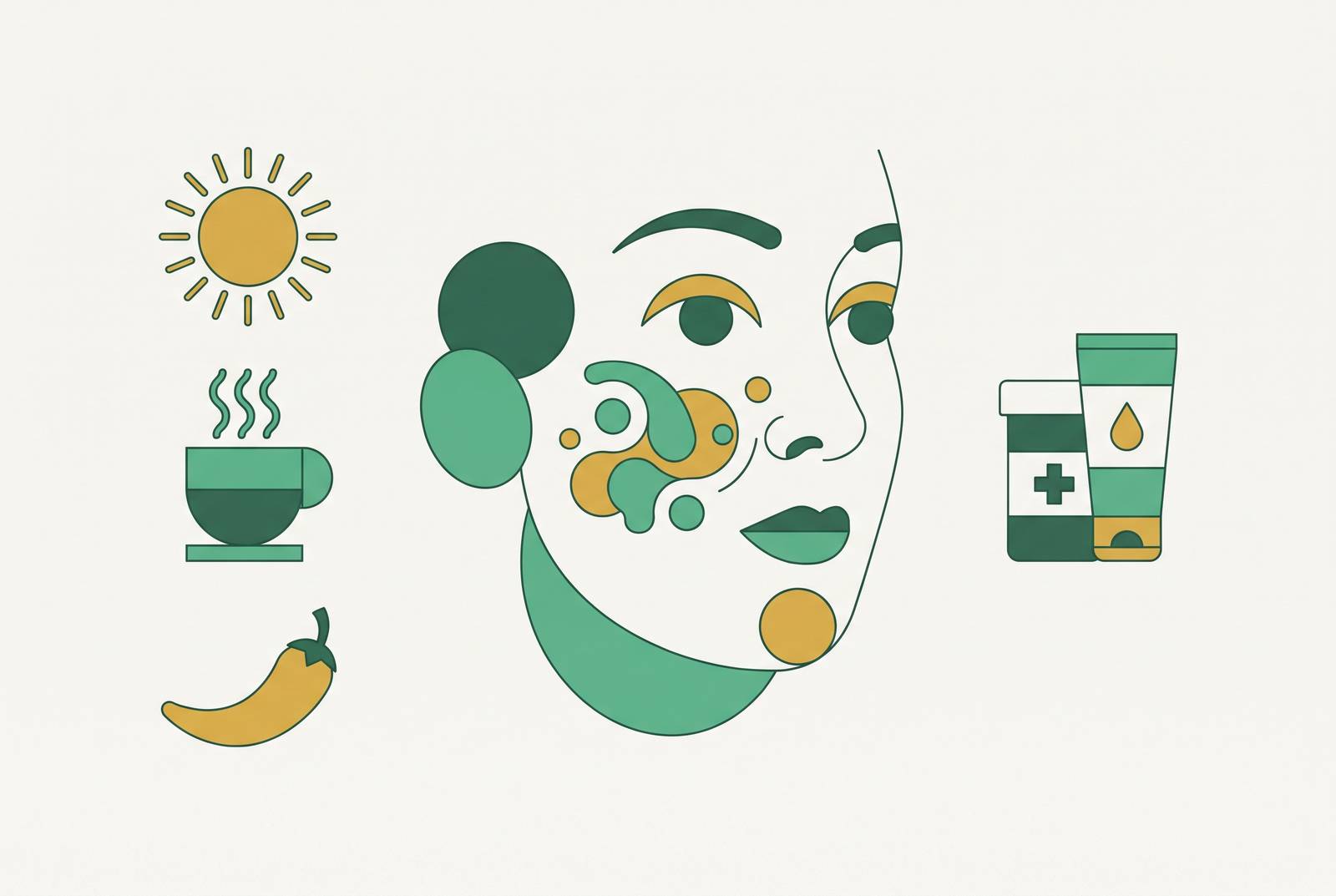
Rosacea is not one disease mechanism wearing different faces. A 2025 systematic review in the International Journal of Molecular Sciences identifies four mechanisms that run at the same time in a person with rosacea: dysregulated innate immunity, neurovascular dysfunction, oxidative stress, and microbiome imbalance. That is the reason a single cream or a single pill so often falls short. Two patients can carry the same diagnosis and still have different pathways doing most of the damage.
Oxidative stress adds another measurable layer. The same review found markers like TOS, OSI, AOPP, and MMP-9, along with the hypoxia-related molecule HIF-1α, running higher in rosacea patients, and these markers track with how severe the disease is and how much vascular involvement shows up. This is inflammatory biology, not cosmetic chemistry, with blood vessels, nerves, immune cells, and microbes all pulling at once.
Clinicians have long sorted rosacea into four subtypes through the National Rosacea Society framework: erythematotelangiectatic (ETR), papulopustular (PPR), phymatous, and ocular. Each subtype roughly lines up with which mechanism dominates. But research in Biomolecules (2025) points out that these subtypes overlap and can progress from one into another, so the old boxes work better as a starting reference than a permanent label. That is part of why the 2019 Global Rosacea Consensus (ROSCO 2019), described in a 2026 Frontiers in Immunology review from Peking University People's Hospital, pushed the field toward diagnosing by observable clinical features. The subtype map still matters. It just works better as a flexible guide than a rigid filing system, and the rest of this piece builds from that map toward specific triggers and specific prescriptions.
How environmental triggers activate the underlying biology
Triggers do not cause rosacea on their own. They activate pathways that are already primed to overreact, and each trigger tends to favor a particular pathway over the others. UV radiation is a clear example: a February 2026 review in Cutis from the Department of Dermatology at Brigham and Women's Hospital describes how UV exposure raises inflammatory cytokine output, boosts VEGF release that drives blood vessel growth and dilation, and adds reactive oxygen species to the mix. Sunlight correlates with how severe the redness gets, but not with how many papules or pustules show up. That distinction matters for a patient trying to figure out what their skin is reacting to.
Temperature works through a different switchboard. Heat and cold activate TRP channels in both neurons and non-neuronal tissue, which then release vasoactive neuropeptides. Emotional stress rides the same neurovascular circuit, with neuropeptides like CGRP and VIP implicated according to a Frontiers in Immunology review.
Demodex mites and other microbial exposures work through oxidative stress. Demodex antigens provoke excess reactive oxygen species by triggering pro-inflammatory cytokine release and drawing in neutrophils. Gut dysbiosis, small intestinal bacterial overgrowth, and Helicobacter pylori round out the trigger list, and the Biomolecules 2025 review supports a real gut-skin connection here, though it is honest that the exact roles SIBO and H. pylori play still need more study. Hormonal shifts deserve a brief mention too: declining estrogen during perimenopause and menopause can weaken the skin barrier, which can trigger rosacea or make an existing case worse.
Because these triggers route through different biology, a generic avoidance list misses the point. The Cutis 2026 review recommends symptom and trigger diaries instead, so you can see which exposures actually move your own skin. On sun protection specifically, that review recommends broad-spectrum sunscreen at SPF 50 or higher, reapplied every two to four hours, along with hats and sun-protective clothing, and avoiding peak UV hours between 10 am and 4 pm. Once you know your own triggers, the next question is which prescription pathway matches the mechanism those triggers are switching on.
How the skin barrier drives flares
A weakened skin barrier in rosacea is not a side effect sitting quietly in the background. It actively feeds the flare cycle. Rosacea skin shows increased transepidermal water loss (TEWL), so moisture escapes faster than it should and irritants slip in more easily. That gives every trigger discussed above an easier route to the same immune and neurovascular pathways already primed to overreact.
The TLR2/LL-37/mTORC1 signaling axis, laid out in the 2026 Frontiers in Immunology review, shows how this plays out at the molecular level. Abnormal serine protease activity lets LL-37 build up in the epidermis. A damaged barrier is not just letting more irritation in. It activates the same inflammatory signals that heat, sun, and stress activate, just through separate routes. That convergence is why barrier repair earns a place in a rosacea management plan before any prescription even enters the picture: a calmer baseline lowers the floor that every other trigger has to work against.
Ingredient choice carries real consequences here, not just comfort value. Ceramides, hyaluronic acid, and fatty acids work directly against TEWL by sealing moisture in. Niacinamide, azelaic acid, and centella asiatica calm redness, reduce how reactive the blood vessels are, and interrupt inflammation at the pathway level, azelaic acid in particular reappears later as a prescription-strength option for papulopustular rosacea, which says something about how much mechanistic overlap exists between skincare and medicine in this condition. The Cutis 2026 review recommends mild, fragrance-free cleansers and barrier-supporting moisturizers as the baseline every rosacea patient should start from, regardless of subtype.
Matching prescription options to the subtype and dominant pathway
Once a patient's dominant phenotype and trigger pattern are clear, the prescription choice should follow the mechanism doing the most damage rather than defaulting to whatever gets prescribed most often. For papulopustular rosacea (PPR), topical metronidazole and azelaic acid remain the established standard with solid clinical backing. Topical ivermectin 1% cream works specifically against the Demodex-driven oxidative stress and cytokine cascade described earlier, and a 2026 network meta-analysis in JAMA Dermatology found that ivermectin and encapsulated benzoyl peroxide outperform metronidazole for reducing lesions. A 2026 randomized split-face trial also found that combining topical ivermectin 1% with KTP 532 nm laser may push outcomes beyond what laser alone achieves.
Erythematotelangiectatic rosacea (ETR) calls for a different tool because the dominant problem is vascular. Brimonidine 0.33% gel, an alpha-adrenergic agonist, produces local vasoconstriction that starts within 30 minutes and lasts 8 to 12 hours, targeting the vascular dysregulation pathway directly. The Cutis 2026 review groups topical alpha-adrenergic agonists with anti-inflammatory agents and laser treatment as the escalation path once lifestyle measures alone stop being enough.
If PPR involves more of the skin, oral antibiotics at anti-inflammatory dosing come into play. Doxycycline at 40 mg modified-release appears at least as effective as the 100 mg dose, with fewer side effects, but that finding rests on low-quality evidence, so it needs appropriate caution. Dual-release minocycline is the newest FDA-approved oral option for rosacea; it earned approval in November 2024, launched in 2025, and Dermatology Times named it one of the year's defining developments in the field. It has been studied across skin types, but its advantage did not reach statistical significance in patients with darker skin tones, a population rosacea research has historically underrepresented, where erythema and telangiectasia are less visible even though the disease is still active underneath.
Device-based therapy targets telangiectasia and persistent redness that topicals cannot fully resolve. Nd:YAG, IPL, KTP laser, and pulsed dye laser have all shown effectiveness against visible blood vessels and erythematous lesions. The 2026 split-face trial pairing KTP 532 nm laser with topical ivermectin 1% suggests combination treatment can outperform laser alone for PPR patients whose vascular involvement is significant. IPL or vascular laser carries solid evidence for redness that topical treatment has not controlled on its own.
A handful of emerging options for disease that resists standard treatment are worth knowing, but their current standing needs to be clear. Oxymetazoline, platelet-rich plasma, and dapsone show clinical benefit in systematic review evidence, but they remain less established than the first-line options above. Tofacitinib, a JAK inhibitor, and oral ivermectin are showing promise specifically in refractory cases, working against the STAT/cytokine signaling axis that STAT1 gain-of-function mutations implicate in familial rosacea. These should be understood as emerging approaches rather than standard-of-care, and any patient considering them deserves a clear conversation about how much evidence currently supports them.
Ocular rosacea sits apart from every pathway above. The Biomolecules 2025 review found it in more than half of rosacea patients, with symptoms ranging from dryness, irritation, and photophobia to conjunctivitis and blepharitis, and severe cases can progress to corneal complications. This is the one subtype where starting with a remote consult is not the right first move. If a patient has visual changes, significant eye pain, or persistent light sensitivity, they need prompt in-person evaluation by an ophthalmologist, alongside dermatologic care.
Probiotics and diet modifications in the management plan
Gut dysbiosis is one of the four mechanisms driving rosacea, so dietary and probiotic strategies have a real biological basis and are not just wellness advice tacked onto a prescription plan. The Biomolecules 2025 review lays out the gut-skin axis directly: dysbiosis, SIBO, and H. pylori all appear to contribute to rosacea's pathology through their effects on innate immune dysregulation, the same immune pathway driving flares at the skin's surface.
Probiotics, prebiotics, postbiotics, and certain nutrients show positive results in current studies. But the same review is direct about a limitation: well-controlled studies proving these interventions actually cause improvement are still missing. Gut-axis strategies work best as an addition you discuss with a clinician alongside evidence-based topicals and oral medications, not as a substitute for them. Dietary triggers remain highly individual as well, and the Cutis 2026 review's recommendation for personalized dietary journaling makes more practical sense than handing every patient the same list of foods to avoid.
Telehealth and AI-assisted assessment in rosacea care
Asynchronous teledermatology can turn a multi-week wait into same-day feedback for most rosacea cases. A patient sends photos and answers a symptom survey through a secure portal, and a teledermatologist reviews everything and sends back a diagnosis, a treatment plan, and follow-up guidance, all without a live video appointment. A 2024 UPMC retrospective study comparing teledermatology to in-person visits for rosacea cases between January 2020 and December 2022 found high agreement for routine presentations. Across common skin conditions including rosacea, the study measured a mean kappa of 0.57, and that reflects moderate-to-good agreement with in-person diagnosis.
Photo quality determines how well that agreement holds up in practice. Presentations that need a hands-on exam, like cystic nodules or pigmented lesions that look ambiguous in a photo, call for an in-person visit instead. And as already established, ocular rosacea is not a candidate for photo-based remote care at all, so any eye involvement belongs in front of a primary care provider or ophthalmologist directly.
AI tools are starting to add real value inside this workflow, with clear boundaries around what they can be trusted to do. One study using 43 clinical photographs found that GPT-4o correctly flagged every rosacea case, but struggled more with identifying which subtype it was looking at, which happens to be the detail that drives which prescription a patient should get. A 2025 pilot study on granulomatous rosacea at Yonsei University found that AI augmentation raised clinicians' diagnostic accuracy from 64.7% to 70.3% (p = 0.0136), with general practitioners showing the biggest gains. That result points toward AI working best as a second opinion for the clinician in the loop, not a stand-in for one. The risk clinicians and researchers both flag most is misclassification when a photo shows ambiguous or overlapping features, exactly the situation where rosacea gets mistaken for acne, perioral dermatitis, or seborrheic dermatitis. Dataset bias and limited interpretability remain open problems, and a clinician still needs to interpret any AI output before a treatment plan gets finalized.
Building a management plan that accounts for all the moving parts
A rosacea management plan has to work on trigger avoidance, barrier support, and subtype-matched prescriptions all at once, because the mechanisms producing symptoms are all active at once, not taking turns. The Cutis 2026 review is explicit that combining lifestyle changes with topical, oral, or laser therapy improves disease control, and that teaching patients about their environmental triggers is a core part of treatment. The phenotype-driven approach from ROSCO 2019 gives every patient the same starting question: what are the dominant observable features here, flushing and visible vessels, papules and pustules, or eye involvement? That answer shapes which triggers deserve the closest attention and which prescription pathway you should pursue first.
The National Rosacea Society has found that most patients are not using the full range of therapy options the evidence actually supports, and that gap between what works and what people are actually prescribed can be closed with better matching between phenotype and treatment. Closing it starts with identifying the dominant phenotype, whether that is erythema and flushing, papules and pustules, or ocular symptoms. And realistic timelines matter throughout: topical treatments generally produce visible change within 4 to 12 weeks, with device-based options added in only after topical and oral treatment is already optimized.
A patient who understands how their own subtype, their own triggers, and their prescription choice connect to each other is in a far stronger position to stay with a treatment plan long enough for it to work, and to report back accurately on what is and isn't helping. That feedback loop, patient to clinician and back again, is what turns a list of treatment options into an actual plan.
Sources
- Molecular Mechanisms in the Etiopathology of Rosacea—Systematic Review - PMC
- The role of skin barrier and immune abnormalities in the pathogenesis of Rosacea
- Probiotics and Diet in Rosacea: Current Evidence and Future Perspectives
- Advances in the pathogenesis of rosacea - PMC - NIH
- Treatment of redness in rosacea with potassium–titanyl- ...