Recurrent Yeast Infections and Underlying Causes
Understanding blood sugar, antibiotics, and immune function can break the recurrence cycle.
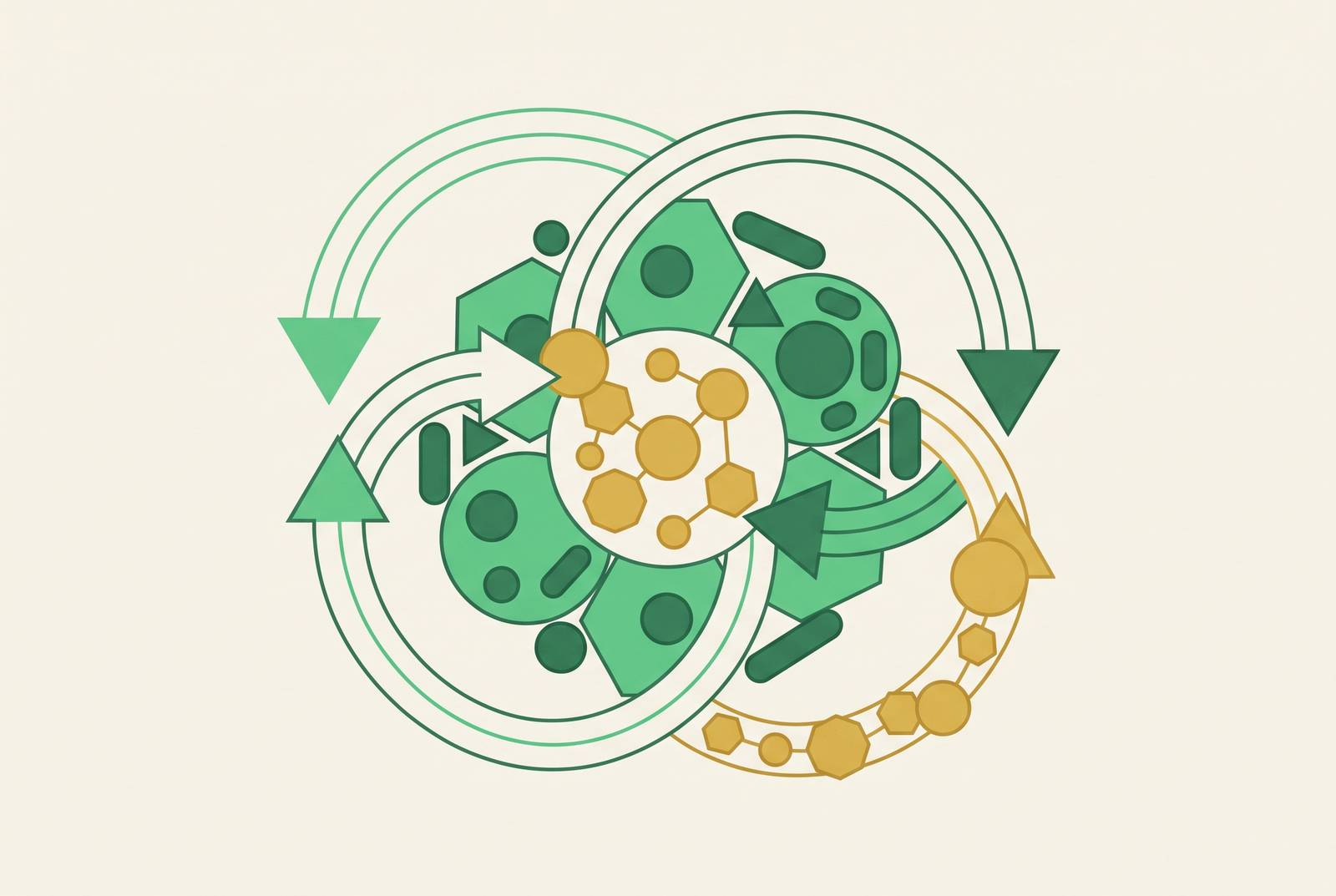
The pattern is familiar to anyone who has lived it: symptoms flare, a round of treatment clears them up, and a few weeks or months later, the same thing happens again. Each round feels like its own isolated event, treated and resolved, until it isn't. Recurrent vulvovaginal candidiasis, or RVVC, is defined by a 2025 systematic review in the Journal of Fungi as three or more episodes within a 12-month period, and it affects enough reproductive-aged women to count as a clinical pattern rather than a run of bad luck. That distinction matters, because a pattern has a cause, and a cause can be found.
The standard response, treat the episode and repeat the prescription as needed, misses what the pattern is actually telling a provider. Suppressive maintenance therapy can keep recurrence in check for as long as a patient stays on it, but the same review notes that these approaches rarely cure the problem for good. The underlying driver stays in place, waiting for the medication to stop. What matters isn't which antifungal to try next, but what, in the body's own chemistry or immune function, keeps recreating the conditions Candida needs to take hold.
That reframe changes what counts as useful information. A fifth course of fluconazole treats the fungus in front of a provider. It does nothing to explain why the fungus keeps coming back, and that explanation is where real, lasting answers live: in blood sugar, in medication history, in hormones, in immune function. The rest of this piece walks through each of those four causes in turn, along with a fifth (resistant Candida strains) that falls outside today's scope but belongs in the same conversation with a provider.
Why the vaginal microbiome is so easy to disrupt
Start with what a healthy vaginal environment looks like, because every root cause that follows is really a different way of knocking it off balance. That acidity is the barrier that keeps Candida in check. Reduce the Lactobacillus population, and that acidic barrier weakens, letting Candida grow unchecked, as laid out in Ubie's clinically reviewed explainer on the subject.
Candida itself is not an invader. It lives in the vagina in small numbers as a matter of course, without causing symptoms, Baylor College of Medicine's OB-GYN resource notes. RVVC is an existing population tipping out of balance and becoming symptomatic, not an infection picked up from somewhere else. That single fact reframes the whole condition: the fungus was always there. What changed is the environment around it.
What makes Candida symptomatic, rather than just present, comes down to a specific behavior called hyphal formation. The organism can switch from a harmless, single-cell yeast form into invasive, thread-like filaments that push into vaginal epithelial cells. The Journal of Fungi review names this shift, increased virulence in Candida species, as one of two major drivers behind recurrence. The other is host immune response. The same review documents that RVVC involves shifts in Th1/Th17 and Th2/Treg cytokine balance, weaker neutrophil and lymphocyte function, overactive CD163+ macrophages and NLRP3 inflammasome activity, and lower levels of mannose-binding lectin. Put simply, the immune system in some women struggles to clear Candida efficiently, even when the fungus itself hasn't changed.
Some of that struggle is written into a person's genes. The same review links polymorphisms in the MBL2, IL-12, NLRP3, and TLR2 genes to higher susceptibility to RVVC. That explains why some women develop recurrent infections with no obvious lifestyle trigger, no new medication, no clear cause. Two mental models carry the rest of this piece. One is the pH and Lactobacillus balance, which outside factors can disrupt. The other is the immune response axis, which internal factors, including genetics, can weaken. Every root cause below is a variation on one or both.
Blood sugar imbalances as a root cause: how glucose in vaginal tissue feeds the cycle
Among the five causes clinicians investigate, elevated blood sugar is the most direct. Candida feeds on glucose, and when blood sugar runs high, more glucose shows up in vaginal secretions, giving the fungus a steady fuel supply. Ubie's clinically reviewed explainer notes that this effect appears even at mild or pre-diabetic blood sugar levels, not just in diagnosed diabetes. A woman doesn't need a diabetes diagnosis for this mechanism to apply. Blood sugar just slightly out of range can be enough to tip the balance.
Evaluating this cause usually starts with a fasting blood glucose test or an HbA1c test, both aimed at catching undiagnosed diabetes or impaired glucose tolerance that might otherwise go unnoticed, Ubie notes. Why test for something that feels unrelated to a yeast infection? Because if glucose is the hidden driver, no amount of antifungal treatment will break the cycle while blood sugar stays elevated.
When glucose turns out to be the cause, the conversation shifts. Glycemic control becomes the treatment, not an antifungal refill. That conversation may belong with a different provider, or an expanded version of the same one, rather than a repeat trip for more fluconazole. The exact path for managing blood sugar varies by person and falls outside what this piece can responsibly spell out. The clinical point stands regardless: treating the yeast without addressing the glucose behind it treats a symptom and leaves the cause standing.
Antibiotic and corticosteroid use as a root cause: when the treatment for one problem creates another
A medication prescribed for something else entirely sometimes causes recurrent yeast infections. Antibiotics don't distinguish between the bacteria causing an infection and the Lactobacillus species protecting the vagina. Broad-spectrum antibiotics wipe out both, and when Lactobacillus numbers drop, the acidic environment that keeps Candida in check collapses with them. Ubie's explainers describe this as a predictable consequence of antibiotic use, not some rare side effect that catches a small number of patients off guard.
Corticosteroids work through a separate path. Used long-term, or inhaled for conditions like asthma, they suppress local immune defenses directly, independent of what's happening to vaginal pH. Ubie notes that this can lower the body's ability to control Candida even when Lactobacillus populations are fully intact. Two different mechanisms, one shared outcome: fungal overgrowth with no obvious trigger, unless someone thinks to ask about medication history.
This is where pattern-matching becomes a useful clinical tool. If yeast infections reliably show up after a course of antibiotics, or line up with a period of steroid use, that timing diagnoses the pattern. A full medication review should go beyond oral antibiotics to include inhaled steroids, topical steroid creams, and injected corticosteroids, as Ubie recommends, since any of these can quietly set the same chain of events in motion. A reader who notices this kind of pattern in their own history has something concrete and useful to bring to a provider: not just "I keep getting yeast infections," but "I keep getting yeast infections after I take this specific medication."
Hormonal fluctuations as a root cause: how estrogen directly feeds Candida growth
Estrogen's link to Candida growth is one of the more specific mechanisms in this list, and one of the most relevant for anyone weighing birth control choices. Estrogen prompts the vaginal lining to produce more glycogen, a sugar compound that Candida uses as fuel to grow. The Journal of Fungi review and Ubie both point to this same pathway: more estrogen leads to more glycogen, and more glycogen means more fuel available for fungal overgrowth. Research cited by Evvy adds a second layer to the story. Higher estrogen doesn't just feed Candida. It also changes how the fungus grows and how it interacts with the immune system, making it easier for yeast to slip past the body's defenses. The effect works on two fronts at once: more food for the fungus, and a weaker immune response standing in its way.
This mechanism appears in a few recognizable, concrete situations. Pregnancy is one of the clearest, particularly in the second and third trimesters, when estrogen rises sharply, a pattern noted by both Tua Saúde and Ubie. Birth control is another. Combined oral contraceptives, hormonal rings, and patches all contain estrogen and can drive the same cycle, while progestin-only pills, often called mini-pills, carry a lower risk because they skip the estrogen component entirely, Ubie notes. Even the menstrual cycle itself can set off a temporary version of this pattern. Evvy notes that blood's slightly alkaline pH can briefly disrupt vaginal acidity around menstruation, which lines up with why some women notice infections clustering around the same point in their cycle every month.
Spotting this pattern starts with simple tracking. Mapping the timing of infections against the menstrual cycle, or against whatever contraceptive method is currently in use, can reveal a hormonal pattern that would otherwise look random, a step Ubie recommends as a starting point. For some women, that mapping leads to a conversation about switching from a combined oral contraceptive to a progestin-only method. That switch is worth discussing with a provider, but it isn't a guaranteed fix, and it has to be weighed against other reproductive goals a person might have, not treated as an automatic solution. Estrogen-independent triggers are also worth tracking. Evvy points out that semen carries a higher pH than vaginal secretions, and that certain lubricants containing glycerin or sugar can feed Candida directly. Both are practical, everyday factors that sit alongside the hormonal picture rather than replacing it, and a provider working through the pattern should hear about both.
Immune suppression as a root cause: when the body's Candida defense is systematically undermined
The last of the host-side causes brings the discussion back to the immune system, this time from a different angle than genetics. Long-term immunosuppressive drugs, the kind prescribed for autoimmune conditions like rheumatoid arthritis or to prevent transplant rejection, dial down the immune system on purpose, as part of treating the condition they're meant for. That suppression doesn't target Candida specifically. It lowers the body's overall ability to keep any opportunistic organism in check, Candida included, which is exactly the trade-off these medications are designed to make for the sake of the primary condition.
This cause sits at the far end of the spectrum from a glucose imbalance or a course of antibiotics, both of which tend to have a clear beginning and, often, a clear fix. Immune suppression from a chronic condition or its treatment is frequently ongoing, and managing recurrent yeast infections in that context usually means coordinating between a primary care provider, an immunologist or rheumatologist, and a gynecologist, rather than treating each flare as a standalone event. That coordination is precisely why RVVC tied to immune suppression tends to need specialist involvement rather than a single prescription refill.
Taken together, these host-side causes, blood sugar, medication, hormones, immune suppression, cover most of what drives recurrence for most women. Some cases don't trace back to any of them, and point instead toward the fungus itself, specifically strains of Candida that have grown resistant to standard antifungal treatment. That possibility sits outside the scope of this piece, but it belongs in the same conversation with a provider. A pattern of recurrence is a signal that traces to an actual source, whichever of these five directions it turns out to point.
Sources
- Recurrent Yeast Infections: 5 Underlying Causes Doctors Check When They Keep Coming Back
- Recurrent Yeast Infections: Why They Keep Coming Back
- Why Do I Keep Getting Yeast Infections Every Month?
- Recurrent Yeast Infections
- Recurrent Vulvovaginal Candidosis and Its Underlying Mechanisms: A Systematic Review
- Recurrent Yeast Infections: Symptoms, Causes & Treatment - Tua Saúde